Anyone who has spoken to me for more than five minutes will know that to get my attention, all you have to do is mention obscure football leagues. While this might seem unusual in the UK or the US, where I’ve spent most of the last decade, my interest in lesser-known leagues has rekindled my love for the game during times when I felt disconnected from it.
So when Hudl suggested that I spent two weeks in Turkiye, working in person with clubs from Poland, the Czech Republic, Ukraine, and even Uzbekistan, my answer was an immediate and resounding yes.
**Pro-tip: To save yourself a New Year’s panic, always ensure your passport has at least six months of validity. You might as well consider it expired if it has less.**
Discovering Antalya: A Hidden Football Capital
And just like that, I was headed to Antalya, eager for real-life interactions with clubs and colleagues.
Antalya is a fascinating place—one of the most visited tourist destinations in the world, a hotspot for Eastern European holidaymakers, and a city lined with plenty of five-star, all-inclusive resorts. The weather is pleasant year-round, and the well-connected airport makes it a favourite getaway for Russian tourists. But beyond its touristic appeal, Antalya is also an unexpected football hub. You can’t drive 500 meters without seeing a pristine football pitch, an incredible contrast to the partly-tarmacked back roads and unfinished buildings nearby.

What I hadn’t fully grasped before my trip was that Antalya transforms into a football capital every January and February. Clubs from Central and Eastern Europe, Central Asia, and even Japan flock here to escape harsh winter conditions at home. I also underestimated the impact of simply showing up in person. After years of Zoom meetings, it’s easy to forget how valuable face-to-face interactions can be.
Week 1: Immersed in Polish Football
Our first week in Antalya started strong, packed with back-to-back meetings and data analysis work in between. With a particular focus on Polish clubs, I was very much in my element.
I’ve been working with Polish football for over three years and have been impressed by the country’s growing interest in data analytics. What stands out is the understanding that implementing strong analysis strategies isn’t an overnight transformation—nobody expects to work like Brighton overnight.
Polish clubs have a realistic grasp of both their ambitions and limitations. Some still view data as too complex and time-consuming without significant investment, while others have embraced it thoughtfully, defining their needs and using data in targeted ways. This patient, step-by-step approach makes my work as an outsider particularly rewarding.
In just a few days, we met with eight different Polish clubs, and one common theme emerged: while they’re generally happy with their talent identification processes, they often find themselves having to go so deep into their transfer target lists that evaluating a player’s true value becomes a challenge. It’s a tough world out there for the lesser known clubs, even for those who do some good work! There is a sense that Polish football is financially growing, and with clubs achieving better results in Europe, recruitment might become easier as the league’s stature grows.
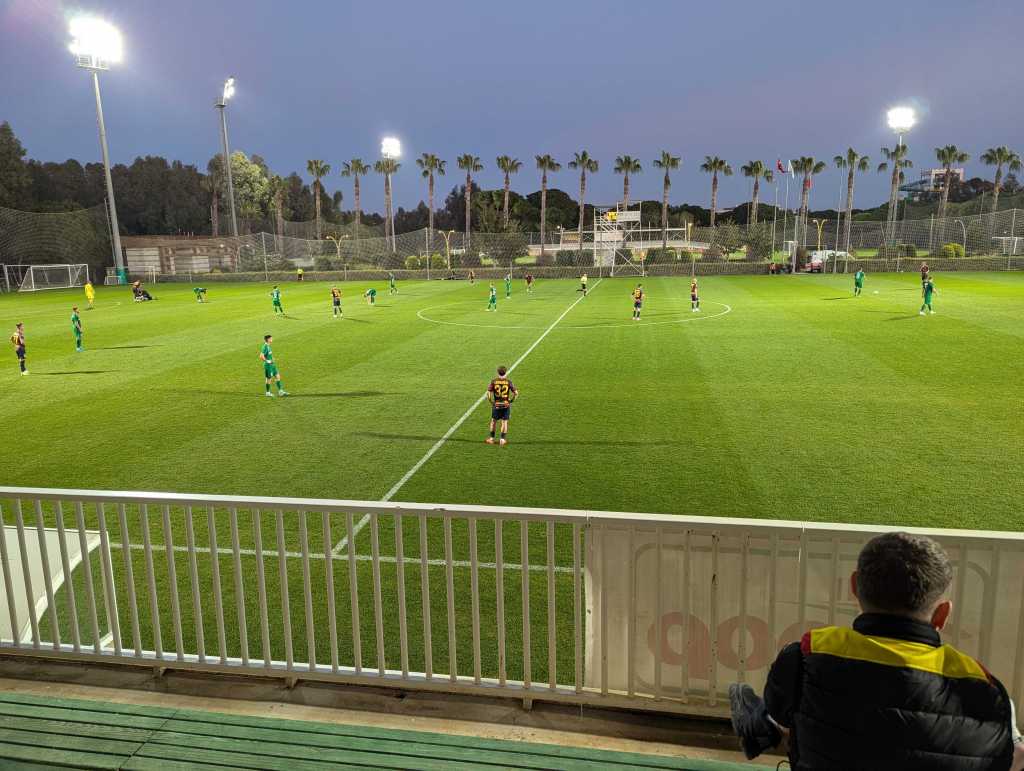
Of course, no football trip would be complete without watching some games. While winter break friendlies don’t always provide deep insights, they were a great opportunity to see players in action. Ryo Germain, the second-highest scorer in the 2024 J1 League, played against Jablonec. Hungarian goalscoring legend Martin Ádám scored against Pogoń. GKS Katowice continued to look impressive after a fiery start to their season.
Week 2: A Deep Dive into Ukrainian Football
The second week in Antalya was a completely different but equally valuable experience. Working alongside colleagues specialising in the Eastern European and Central Asian markets, we spent significant time with Ukrainian clubs.
Teams like Dynamo Kyiv and Karpaty Lviv welcomed us with open arms, eager to share their vision. It’s easy in the West to overlook the depth of the football culture in Eastern Europe; institutions like Dynamo Kyiv have been pioneering advanced analysis and tactical innovations long before most clubs had computers. The analysts and coaches I met were razor-sharp, leaving no room for vague answers. I loved being challenged in a respectful way and hope I provided them with valuable insights in return.
One figure who left a lasting impression on me was Mr Oleksandr Kozlov, who has led Dynamo’s analytics department for over 30 years. Despite our language barrier, his depth of knowledge spoke for itself. I hope our paths will cross again.
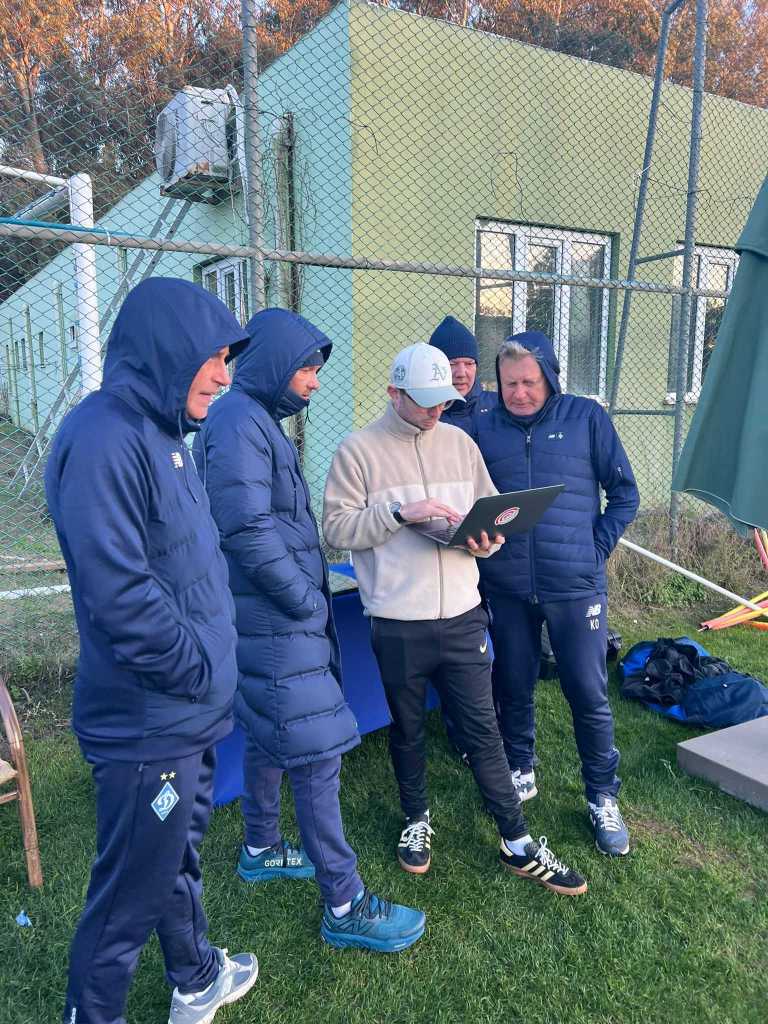
Working with Ukrainian clubs in the current geopolitical climate was a powerful reminder that football doesn’t stop—it remains a unifying force even in the most challenging times.
My colleague Oleh was particularly impressive. His deep network within Ukrainian football allowed us to secure meetings with heads of departments, sporting directors, and first-team managers who gave us their full attention. Meanwhile, my other colleague, Vadim, was a fantastic translator. Football jargon can be tricky to translate, but Vadim’s experience in the industry made it seamless.
A special moment came when we presented data work to UEFA Pro Licence candidates from Georgia. I believe that data can empower coaches if they know where and what to look for. Data is useful when it makes sense to those on the pitch, and I hope that message resonated.
Final Thoughts: Lessons from Antalya
I leave Turkiye with more work to do than when I arrived, and a lot to reflect on. But if I had to keep my key takeaways from this trip, they would be:
- Football’s reach is bigger than we imagine. People care about it everywhere, and so many clubs are eager to learn but rarely get the opportunity.
- Respect earns respect. Always prepare as if you’re presenting in a formal setting, even if the plan is just to “grab a coffee.”
- Present your data in ways that are understood by all. Coaches want technology that can help them win, not just another laptop on the bench.
 Antoine Maratray