On the pitch trends and the off-pitch fight for African football’s identity
AFCON kicked off last Sunday in Rabat with an impressive opening ceremony. Modern football grandeur was on full display, somewhat undermined by an infuriating Gianni Infantino speech about “bringing football together.” Still, Morocco showed the world it was ready to host a major international tournament.
The opening match that followed was typical of early group-stage football: an underwhelming affair between a clear favourite and a well-organised underdog. Comoros disrupted Morocco’s attacking rhythm with an effective low block, frustrating the hosts for long spells until Brahim Díaz finally broke the deadlock shortly before the hour.
Despite a 2–0 win that looks comfortable on paper, concerns remain about Morocco’s ability to break down deep defensive teams, an issue likely to persist in a competition where favourites often face compact, disciplined opposition with increasing quality.
Favourites Watch
Algeria and Tunisia both made light work of their opening matches, scoring early against Uganda and Sudan respectively. Riyad Mahrez looked sharp and showed that he remains Algeria’s main man.
Senegal, however, produced the most convincing performance of the round.
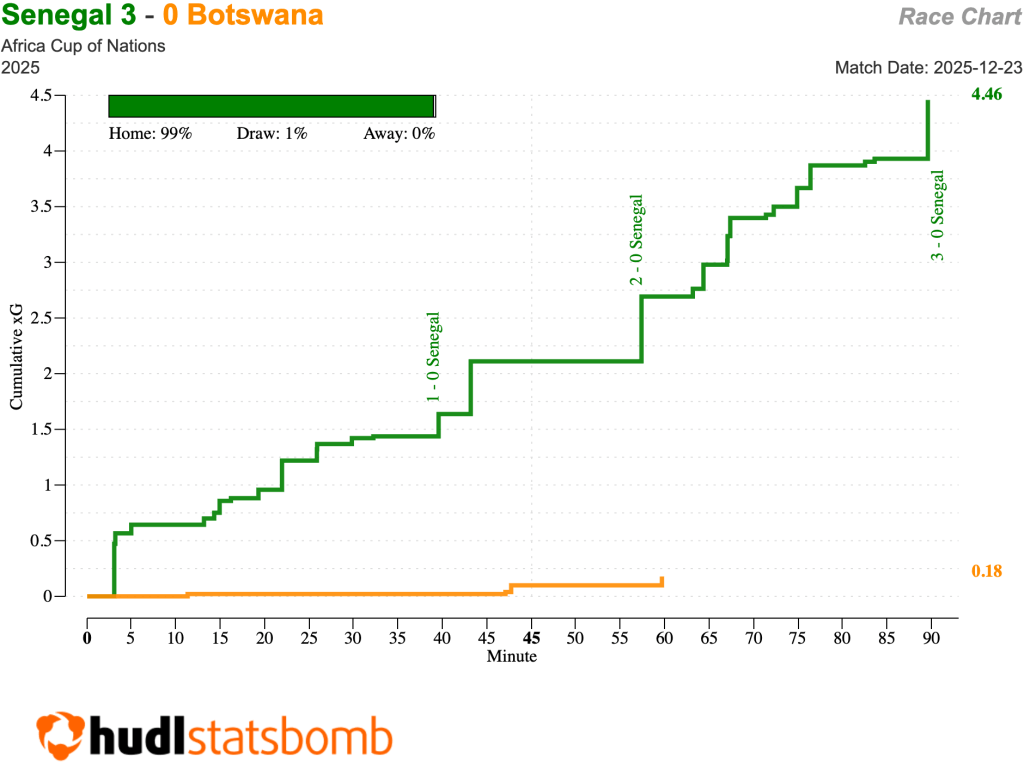
Their dominant win over Botswana showcased physical superiority, control, and offensive ability. The hallmarks of a tournament-winning side you may say.
Cameroon and Côte d’Ivoire did the bare minimum, securing narrow 1–0 wins against Gabon and Mozambique. The matches themselves offered little to remember, except another strong showing from Guéla Doué. Already impressing at Strasbourg, Doué’s versatility, capable of playing as a full-back, wing-back, or right centre-back in a back three, continues to stand out. It would not be surprising to see serious interest arrive.
Nigeria, fielding a somewhat unbalanced line-up designed to accommodate the attacking firepower of Osimhen, Adams, Lookman, and Chukwueze, eventually did enough against a brave Tanzanian side. Ademola Lookman’s stunning goal was the standout moment.
South Africa, Angola, and the Third-Place Battle
South Africa struggled against Angola in one of the more tactically interesting games of the round. With both teams registering ten shots, Angola created higher-quality chances, taking seven of those efforts inside the box. South Africa, meanwhile, relied on fantastic finishes courtesy of Lyle Foster and Oswin Appollis to clinch the three points.
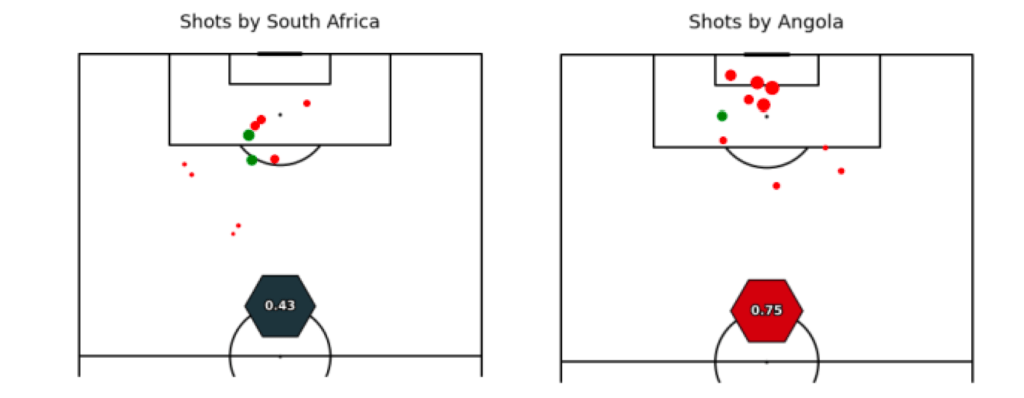
Encouragingly for Angola, their in-possession structure was bold and proactive. Their shape remained high and wide, mirroring South Africa’s own approach rather than retreating into a passive block. In a 24-team AFCON, where four of the six third-placed teams qualify, this potentially matters. Their upcoming match against Zimbabwe already feels decisive in that race for third place, particularly as Angola can expect to see more of the ball.
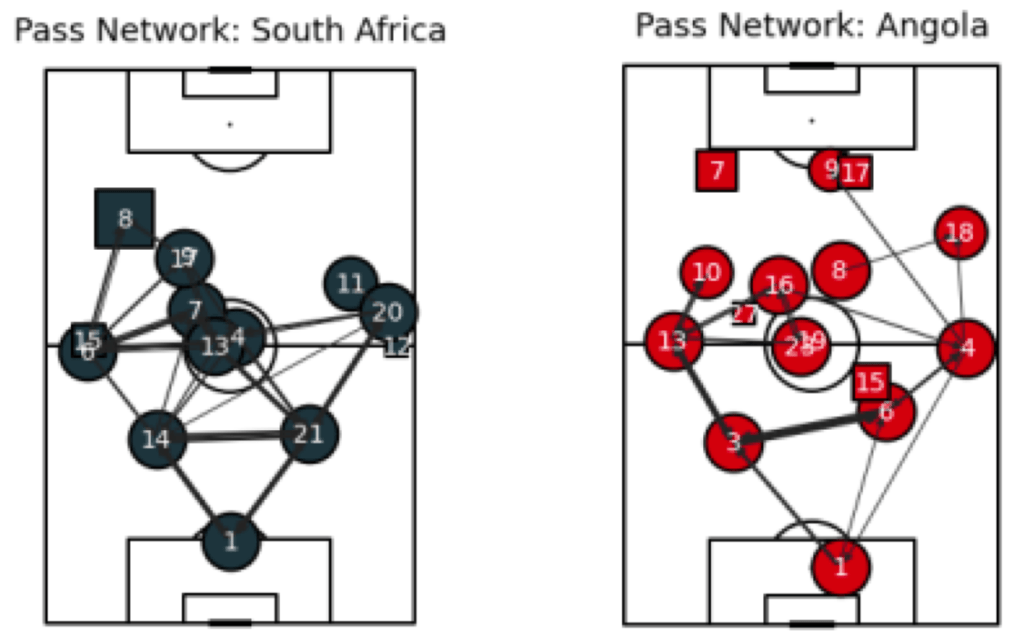
One concern remains their ability to involve their striker, Pisa’s M’Bala Nzola. If Angola struggles to connect him to their attacking play and convert chances, their limitations will become increasingly apparent.
South Africa’s next challenge comes against Egypt. The Pharaohs dominated Zimbabwe in their opener but required a last-minute Mohamed Salah goal to secure victory. Should Egypt manage to score earlier in matches, they have all the ingredients to become one of the tournament’s most effective defensive units.
Other Interesting Games: Mali vs Zambia / Burkina Faso vs Equatorial Guinea
Mali remains one of AFCON’s most familiar teams: a technically gifted, entertaining side that consistently falls short. Round 1 did little to change that perception. Sinayoko and Nene Dorgeles provided creativity and threat, supported by Kamory Doumbia and Mamadou Sangaré, but inefficiency in front of goal once again proved costly.
El Bilal Touré’s missed penalty summed up Mali’s frustrations, a performance lacking confidence when it mattered most.
Zambia, meanwhile, arrived with low expectations, plagued by internal issues. They were largely outplayed but capitalised on Mali’s wastefulness. After conceding, Zambia responded strongly, going from 0 to 0.65 xG in the 20 minutes that followed. Patson Daka’s excellent header, created from very little, earned them a crucial point. With Comoros next, Zambia’s hopes of progression suddenly look realistic.
The Bigger Picture: Why AFCON Matters
I began this piece by mentioning Gianni Infantino’s opening speech, and it is worth returning to him because just 24 hours before the tournament began, Gianni, supported by CAF president Patrice Motsepe, agreed to change AFCON’s format to a summer tournament held every four years (as opposed to the current bi-annual format in winter).
Officially, this shift is framed as a decision made “for the benefit of African football and its players.” In reality, it satisfies European clubs increasingly frustrated by losing African players mid-season every two years.
While European clubs will quietly welcome the change, the actors of African football; national teams, players, and fans will view it as a betrayal. African football exists in a strange contradiction: it is in high demand globally yet remains underexposed. Clubs worldwide scout the continent aggressively, form partnerships with local teams, and consume its data and footage when available. Yet AFCON remains one of the few moments African football truly occupies the global stage.
Is it really unreasonable to accept that the affordability, determination, and talent of African players comes with the caveat that every two years they spend three to five weeks representing their countries? Those same clubs are more than happy to reap the financial rewards of post-AFCON transfer value increases.
Beyond club football politics, AFCON carries a cultural and political weight that is often underestimated in the West. The scale of the continent, its diversity, and its internal dynamics make AFCON a rare unifying moment. National team performances influence political public sentiment. Fans travel, celebrate, and identify with teams in ways no other tournaments can replicate.
AFCON is unique: 24 teams qualified from 54 possible nations, representing the very best of the continent. Few international tournaments have a wider-reaching impact.
Waiting four years between AFCONs?
No, thank you very much!
 Antoine Maratray
Leave a comment