After a Round 1 that largely went as expected, the second round of group-stage games was meant to provide clarity. For the favourites, it offered a chance to secure early qualification and assert dominance as top seeds heading into the knockout stage.
Instead, Round 2 confirmed several early conclusions drawn from the opening matches and delivered some superb entertainment in lower-profile fixtures. As pressure increased, a recurring pattern emerged: results over identity, survival over expression.
The Worried Winners
Egypt arguably secured the best result among the traditional heavyweights with a 1–0 win over South Africa. Was it pretty? No. Was it deserved? Not really.
More worryingly, the Pharaohs produced a dismal attacking display, salvaged only by a very generous penalty won and converted by Mo Salah. Across the entire match, Egypt registered just five non-penalty shots, only two of them from inside the box, for a total of 0.26 xG. The numbers speak for themselves.
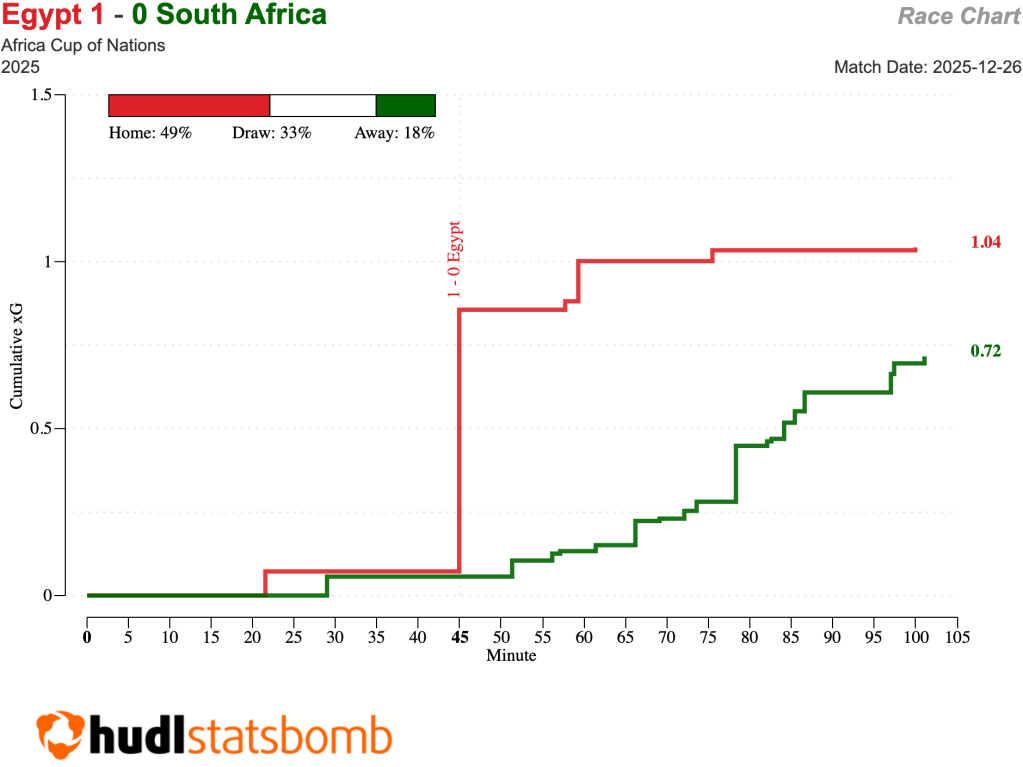
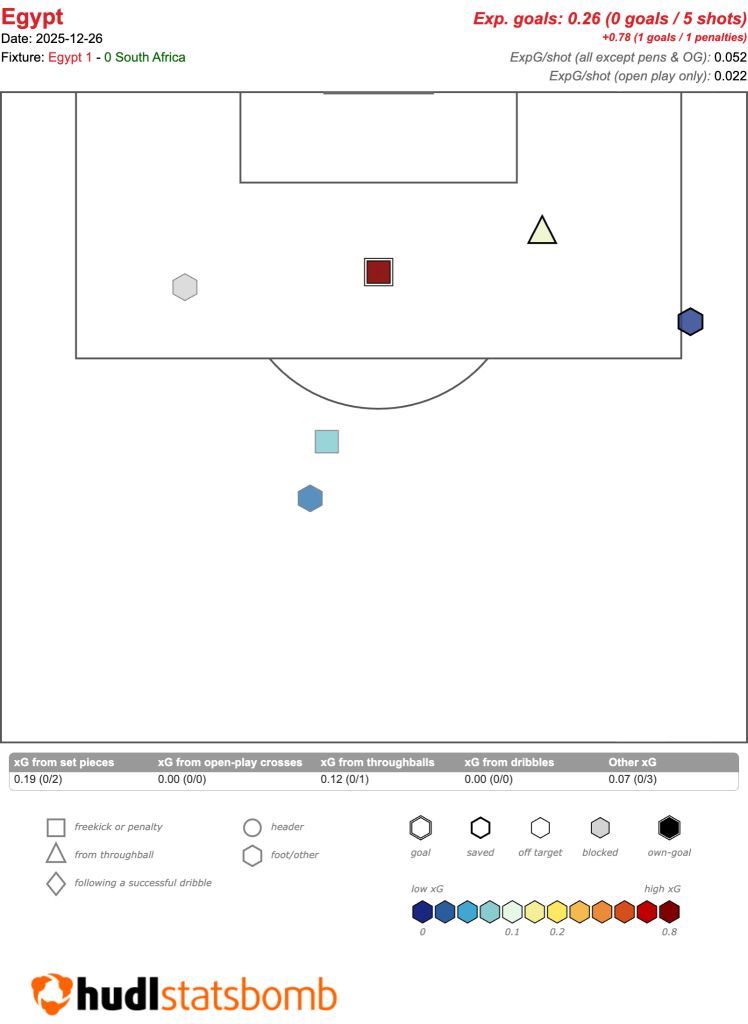
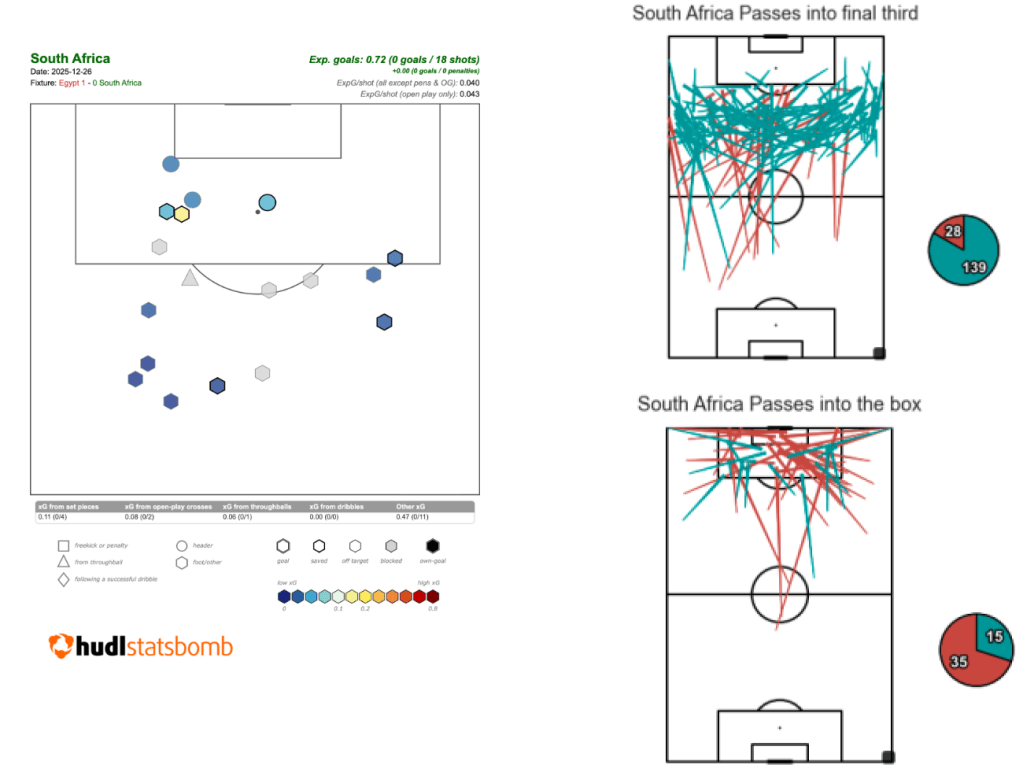
On the positive side for Hossam Hassan’s men, Egypt once again showed they can rely on a solid defensive foundation. South Africa were limited to just one shot in the first half and resorted to low-value, speculative efforts after the break.
That, however, should be a concern for Hugo Broos’ side, who appear to be running out of ideas in the final third when faced with well-structured opposition.
Algeria also secured qualification with a narrow 1–0 win, once again courtesy of a penalty converted by their star player. Burkina Faso, however, proved a far tougher opponent than expected and will feel frustrated by their inability to convert chances.
Ibrahim Maza combined well with Aït-Nouri and Mahrez and was involved throughout, but ultimately failed to capitalise on the four shots he attempted. Despite that, he remains one to watch and potentially one of the rising stars of this AFCON.
The Inconclusive Draws
In the Round 1 review, we highlighted Morocco’s struggles against well-organised, physical low blocks and suggested those issues might worsen as opposition quality increased. What was less expected was Mali becoming the team to pose that challenge.
Gone were Mali’s unpredictable technical profiles. Kamory Doumbia, Dorgeles Nene, and El Bilal Touré made way for a disciplined 4-5-1, with Yves Bissouma and Sinayoko the only realistic attacking threats. Organised and aggressive, Mali also rode their luck as Saibari missed an open goal inside the first 20 minutes.
Morocco eventually broke the deadlock through a penalty following a handball by Gassama, but the pattern remained unchanged. Mali continued to absorb pressure, and in the second half were rewarded when El Yamiq gifted them a penalty with a mistimed and uncontrolled tackle.
The match ended 1–1, leaving Mali still in need of a win if they are to control their qualification hopes.
Another highly anticipated clash ended with the same scoreline as Côte d’Ivoire and Cameroon played out a balanced and engaging draw. Momentum swung back and forth, with both sides creating a similar volume of shots. Côte d’Ivoire, however, edged ahead in shot quality, with Epassy denying Franck Kessié shortly after VAR ruled out the Ivorians’ opener.
Cameroon equalised through a deflected effort by Konan, catching Yahia Fofana off his line.
The star of the show was Amad Diallo once again. Scoring his second goal of the tournament, he continues to establish himself as Côte d’Ivoire’s primary attacking threat from the right. His opener, cutting inside and finishing calmly into the side netting, was a moment of real quality.
Chelle’s Nigeria: Signs of Real Promise
Another headline fixture was Nigeria facing Tunisia. Given Nigeria’s uneven qualifying campaign, many observers were hesitant to consider them serious contenders. Their performance here, however, was convincing… At least for 75 minutes!
Chelle adjusted from Round 1’s ultra-attacking setup, introducing a more stable midfield pairing of Onyeka and Ndidi while retaining the Lookman–Osimhen–Adams front line. The balance proved effective.
After several near misses, Osimhen opened the scoring with a well-taken header. Ndidi doubled the lead after the break, converting from a well-worked corner, before Lookman made it 3–0, adding a goal to his two assists.
Nigeria’s control slipped late on, with Tunisia pulling two goals back. Talbi heading in from a free kick and Abdi converting a late penalty. Too little, too late.
Nigeria can now cap their strong start to the tournament with a win against Uganda. With expectations lower than usual, the question remains: can the Super Eagles grow into genuine contenders as the tournament progresses?
Unexpected Fun
Gabon versus Mozambique delivered one of the most entertaining matches of the round. Mozambique dominated the first half both in possession and chance creation, scoring twice before the break.
At 42 years old, Dominguês Pelembe dictated play with intelligence and precision, combining beautifully with Catamo down the right. Yet the standout performer was Mozambique’s goalkeeper, Ernan, whose series of outstanding saves will likely give Pierre-Emerick Aubameyang sleepless nights.
The match remained open deep into the second half, with both teams matching each other stride for stride. Each side posted an xG just under 2.
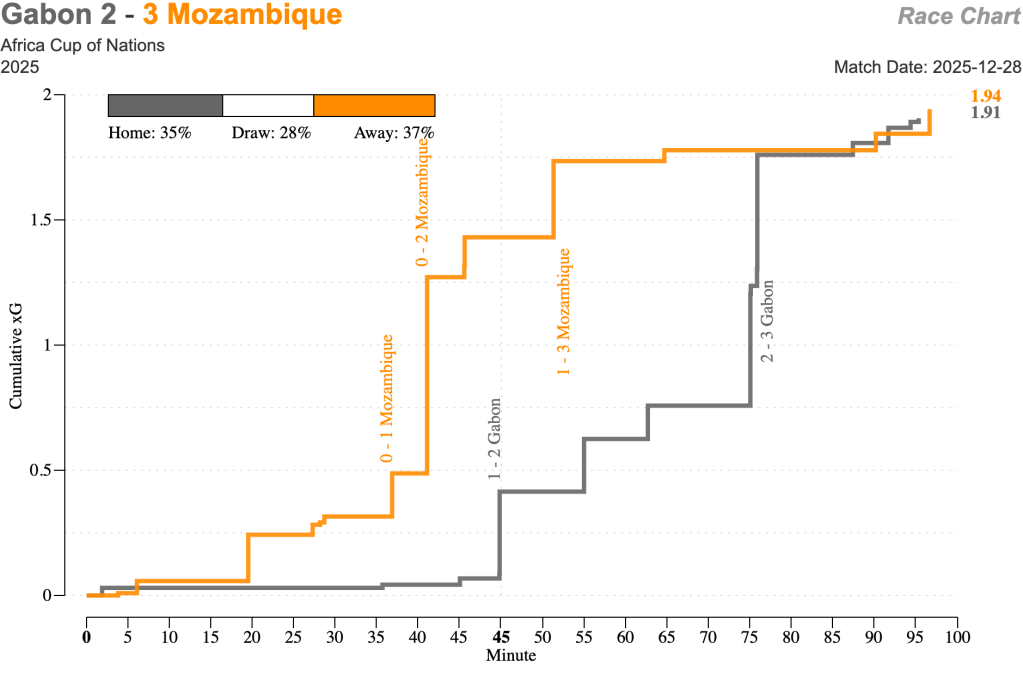
Can Mozambique carry this freedom and attacking intent into the knockout stages, should they qualify? On this evidence, they would be a welcome addition.
Should Identity be put on Hold?
Two rounds in, AFCON is already revealing one of its most familiar truths: identity is negotiable, results are not. Egypt and Algeria continue to win despite glaring attacking limitations. Morocco and Mali neutralised each other through caution rather than expression. Even Nigeria, impressive as they were, finished the match hanging on rather than imposing themselves to the end.
And yet, away from the spotlight, the tournament continues to breathe. The example of Mozambique, with little external expectation, is playing with freedom, ambition, and personality. It is often there, rather than among the traditional giants, that AFCON’s soul reveals itself.
As the group stage reaches its decisive phase, the key question is no longer who looks best on paper, but who can strike the right balance between pragmatism and identity. History suggests that those who abandon themselves entirely rarely go all the way.
 Antoine Maratray
Leave a comment